
We woke early this morning in our Meningie Airbnb cottage, greeted not by alarms or traffic but by the soft chorus of birdsong. There’s something tender about waking to birds — you feel like the day itself is calling you gently awake. When I stepped outside, the air still carried a blue tint, that in-between moment when dawn hasn’t quite surrendered to daylight but is already painting the world with colour.

Inside, the aroma of a hearty country breakfast soon filled the cottage. Bacon and eggs sizzled away, the simple meal made special by the setting. Something about this cottage stirred a quiet ache in me — it reminded me of my grandma. The walls, the cosiness, even the morning routine echoed of times long ago, and being here brought her memory rushing back. It’s funny how a place can suddenly pull at the threads of your heart.

After breakfast, we wandered down to the lake.

The water lay still, reflecting the soft morning light.

From there, we took time to explore some of the old buildings nearby. These historic South Australian stone buildings never fail to capture us — they stand so solid, yet with a quiet elegance, their weathered walls holding stories of lives gone by. There’s a timelessness about them, like they’re stitched into the very fabric of the landscape.

Our next stop was the famed Pink Lake. I had read about its vibrant hues, and though today I only caught the faintest twinkle of pink across the salt flats, it was enough to stir the imagination.

Locals say the the pink colour is at its most vibrant in late summer or early autumn, when the light and weather come together in just the right way. But even without its strongest blush, there was something special about standing before this unusual lake. There was so much salt shimmering across the surface that for a moment, it reminded me of the frozen lakes of my Finland — still, pale, and glistening under a quiet sky.

Not far from the Pink Lake, we reached the banks of the Murray and rolled onto the little car ferry that would take us across.

There was something humbling about gliding over this river today, knowing the journey it makes. Born high in the Australian Alps, the Murray winds its way across 2,756 kilometres of country — twisting, curving, nourishing landscapes and communities — before finally surrendering to the Southern Ocean at Goolwa, not far from where we are driving today.

To think that we were at the very end of its long story filled me with awe. The water looked steady and sure, carrying centuries of history along its surface. Farmers, explorers, Indigenous communities, traders — so many lives have depended on this river, and still do. No wonder it has earned its title: the Mighty Murray.

What makes today feel even more special is knowing that this won’t be our only meeting with the Murray. The river flows through the Riverland Region of South Australia, and we’ll catch up with it again in Morgan before following its banks for an incredible 630 kilometres, all the way to Echuca on our journey back to Melbourne.
For much of that stretch, the Murray marks the border between Victoria and New South Wales, twisting and turning like a companion guiding us home. To have crossed it here at its end, and then know we will travel alongside one of the world’s longest rivers for so much of our return, feels like an invisible thread binding this adventure together.

On the banks of the Murray, right beside the ferry crossing, stands the old Wellington Courthouse. Built in 1864, this sturdy stone building once held a whole world within its walls — a police station, cells, and the post and telegraph offices that kept the town connected in a time before phones and highways.

Today its story continues in a gentler way. The courthouse is now a National Trust building, welcoming visitors as a heritage museum, a cosy bed and breakfast, and even a little café. I love how these historic places are given new life — still serving the community, but now as keepers of memory and storytellers of the past. Sitting there, with the river flowing steadily by, you can almost imagine the footsteps of officers, townsfolk, and travellers who came here more than 150 years ago.

These beautiful stone buildings keep appearing on our journey, each one unique, yet bound together by their timeless character. From Meningie to Wellington, they seem to anchor the landscape, reminding us of resilience, resourcefulness, and the generations who once carved out their lives in this part of South Australia.

The scenery grew prettier and prettier the further we drove. At first there were open stretches of green fields, lush and full of promise.

Then came the bright yellow sweep of rapeseed in bloom, glowing like sunlight poured onto the land.

Before long, vineyards stretched in neat rows across gentle slopes, their symmetry adding another texture to the view.

From the car window it all unfolded like a patchwork quilt — green, yellow, vine-striped, then green again — each piece repeating itself until a larger pattern emerged across the countryside. It was the kind of drive where your eyes never tire, always catching a new shade or a fresh angle of beauty.

Our drive eventually brought us to Lake Breeze Wines, one of Australia’s most awarded boutique wineries. Nestled in the Langhorne Creek wine region, between the Adelaide Hills and Lake Alexandrina, it sits in a district with deep roots — one of the oldest wine regions in the country.

We were welcomed by Ronan, who guided us through a tasting with genuine enthusiasm and knowledge. He explained each wine with such ease that it felt like stepping into the vineyard’s story, not just sipping what came from it.

Lake Breeze’s timeline reaches far back. In the 1880s, Arthur Follett married Henry Fairweather’s daughter Alice and planted the first vines here. By 1928, Arthur’s eldest son, Harry Follett, had built the homestead and the original cellar door, charmingly named Bernoota.

The family’s dedication has clearly carried on — generation after generation tending to these same soils.

It felt especially fitting, then, that one of the bottles Peter chose today was a 2022 Bernoota, a Shiraz and Cabernet Sauvignon blend crafted from old vines still flourishing on the Follett family vineyard. To hold that bottle in hand felt like holding a piece of their story — a thread running from the 19th century right into our day.

Beyond the wine, it was the setting that captured my heart.

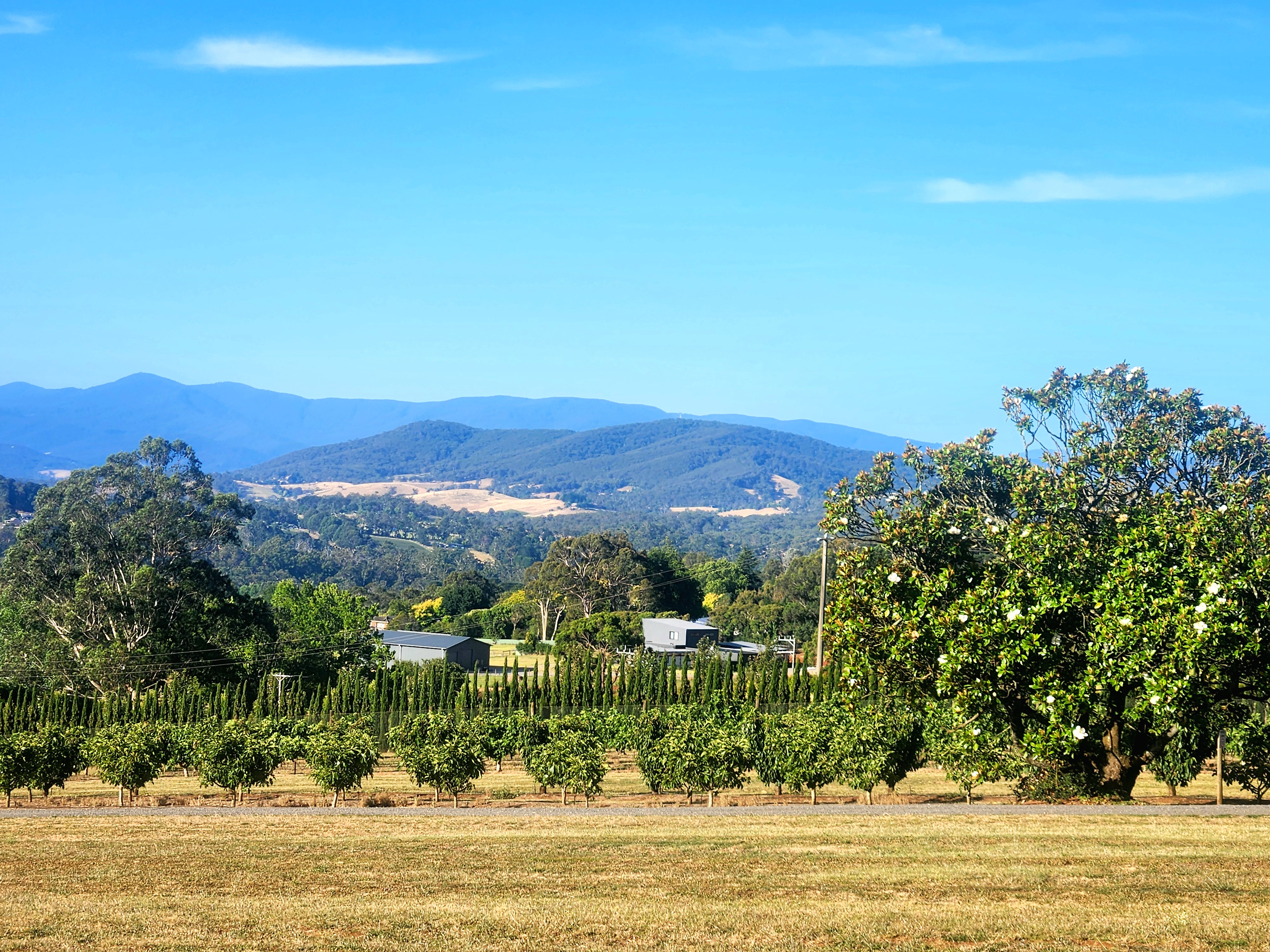
From the cellar door, sweeping views stretched out across vineyards and farmland, a peaceful expanse of green and gold under a soft South Australian sky. Floral plantings framed the entrance, adding splashes of colour, while the gardens around the property gave everything a gentle, welcoming charm.

Inside, a cosy fire glowed in the dining room, the kind of warmth that invites you to linger. It was one of those places where the beauty of the wine was perfectly matched by the beauty of its surroundings.

Leaving Lake Breeze behind, with its sweeping vineyard views and that lingering sense of history, we pointed the car toward Strathalbyn.

The road wound past more farmland and vineyards before giving way to rolling countryside, and it felt like each turn carried us deeper into a softer, more picturesque part of South Australia. By the time we arrived, we were already charmed by the drive itself — but nothing prepared us for what awaited in Strathalbyn.

Strathalbyn was a totally pleasant surprise for us. We had no idea we would stumble upon such a captivating country town. I had only researched it briefly, learning that it was home to many historical buildings, which was enough to spark my interest and convince me we should detour there for a look. What we found was so much more — it turned out to be one of our favourite happy surprises of the entire road trip.

The town is simply stunning. Attractive at every angle, with an elegance that draws your eyes wherever you wander. We loved the feel of it immediately. There was a sense of balance — history in the stonework, charm in the shopfronts, and a quiet beauty stitched into the gardens and parks.

We strolled along the banks of the river that winds through town and paused at the Soldiers Memorial Gardens, a beautifully kept park where tall trees and flowerbeds framed the gentle flow of water.

Grand old stone churches stood proudly nearby, their spires reaching above the rooftops, as if watching over the town.

The main street was lined with heritage shopfronts and welcoming cafes.

Everywhere we turned there was something to admire — whether it was the craftsmanship of the buildings or the serenity of the open green spaces.

Strathalbyn had a way of slowing us down.

We kept walking and circling back, not because we were lost but because we didn’t want to leave too soon.

It felt like the kind of place you could happily linger in for days, always finding another corner of charm to discover — but eventually we had to move on.

As we drove away, the countryside between Strathalbyn and Port Elliot unfolded before us, nothing short of breathtaking.

Rolling green hills unfolded before us, gentle and inviting, their slopes broken here and there by groves of trees and winding country lanes. The fields of rapeseed returned too, blazing bright yellow against the soft greens like brushstrokes across a canvas.

Every rise and fall of the land revealed another picture-perfect scene — patchwork fields, farmhouses tucked into valleys, and the occasional glimpse of sheep grazing contentedly in the sunshine.

It was the kind of drive where you find yourself constantly saying “just look at that!” — each view more beautiful than the last. The hills seemed to ripple in every direction, while the bursts of yellow rapeseed shimmered like pockets of sunlight scattered across the landscape.

With the blue sky stretched wide above us, dotted with soft white clouds, it felt like driving through a moving painting.

We couldn’t resist a little stop at the famous Port Elliot Bakery, where we picked up a few treats to enjoy later.

From there, it was only a short drive before we pulled up to our gorgeous Airbnb in Victor Harbor — Mrs Percival’s Luxe Heritage Accommodation right in the heart of town.

The moment we stepped inside, I was smitten. This century-old maisonette villa has been meticulously restored and styled with such care that it feels both rich in history and brimming with comfort.

The balance between character and modern luxury is just perfect. Out the back, tucked into the lush garden, a deep-soak claw-footed bath is waiting — an invitation to unwind that feels almost too dreamy to be true.

Inside, I couldn’t stop admiring the details. It all came together in a way that reminded me of the very best furnishing shops you wander into — the kind you never want to leave. Only this time, I didn’t have to; for a little while, it’s ours to enjoy.

After such a full and beautiful day, arriving here felt like stepping into a sanctuary.

The moment we walked through the door, the world outside seemed to quieten. Every room offered rest, beauty, and a touch of old-world charm that made us feel both cared for and completely at home.

Before retreating fully into our little sanctuary, we headed out for dinner at Nino’s — and it was just perfect. We arrived hungry, and from the moment we sat down, we were made to feel so welcome. The hospitality was genuine, the kind where nothing is ever too much trouble. When our meals arrived, every bite was delicious — comforting, generous, and exactly what we needed after such a full day on the road. By the time we left, we felt not just well-fed, but thoroughly cared for.

Days like this remind me why I love to travel.

There’s a rhythm to it — the early morning birdsong, the unexpected delights of small towns, the beauty of landscapes unfolding mile after mile, and then, finally, the quiet reward of arriving somewhere that feels like home.

Our villa here in Victor Harbor is more than just a place to stay — it’s the perfect ending to a perfect day.

It offers rest for the body, beauty for the eyes, and comfort for the soul.

Tonight, as I sink into this sanctuary, I feel grateful for the journey, for the surprises along the way, and for the joy of discovering places that linger in the heart long after the day is done.


Leave a Reply to AnonymousCancel reply