
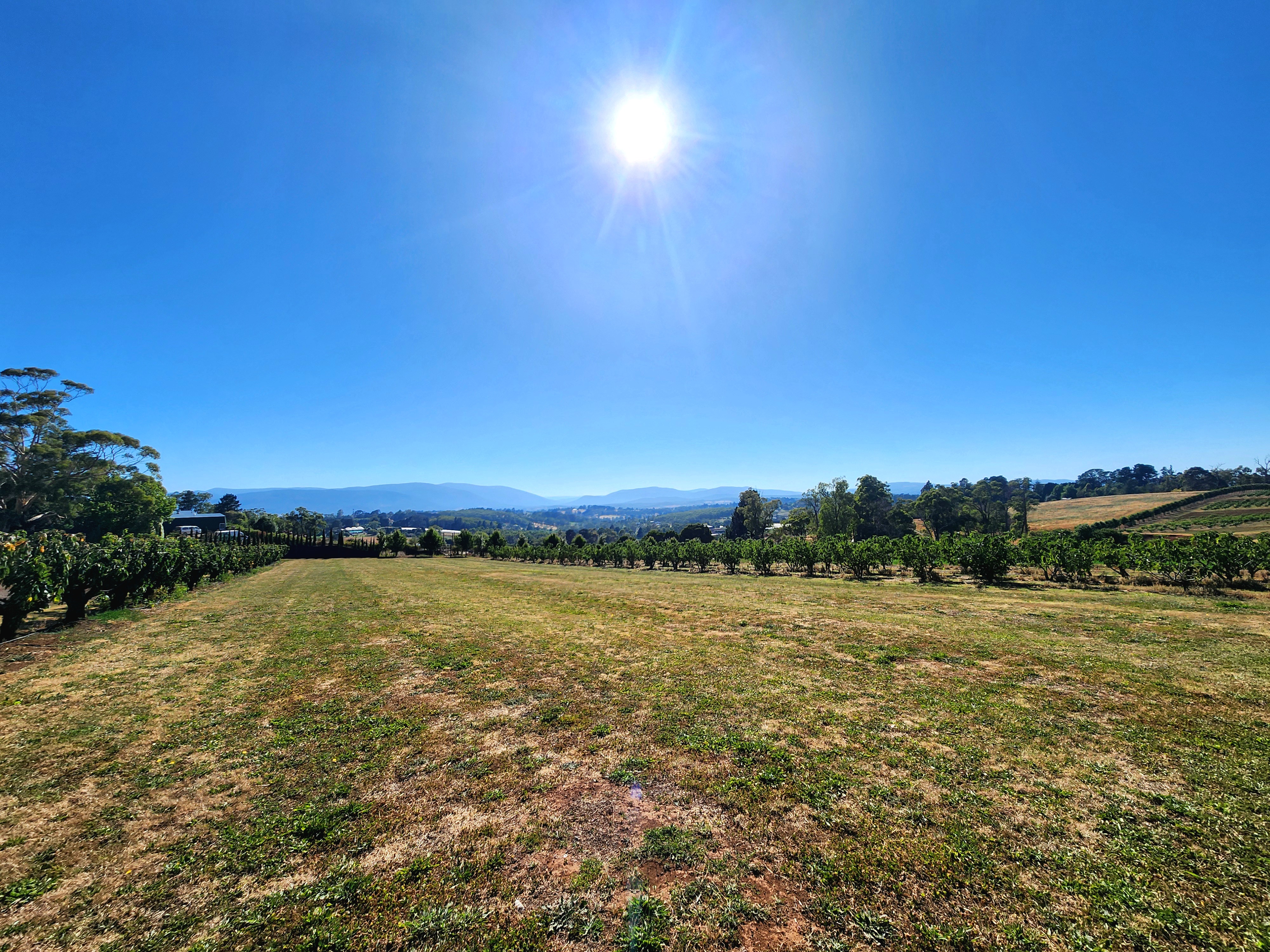
We woke to the soft hush of morning in Leasingham, the Clare Valley’s vineyards stretching in every direction like a patchwork quilt stitched with vines.

The Airbnb’s beautiful leadlight windows caught the morning sun, scattering colour across the rustic walls.

Before coffee, chai, or breakfast, we had unexpected visitors — the resident goats, playfully butting heads in front of our door.

Not to be outdone, two Helmeted Guineafowls strutted across to us, their spotted plumage glinting in the first light. They clucked and called in their curious way, a sound that seemed less like birdsong and more like an eccentric “good morning”. It was a wake-up call that felt entirely in tune with the rustic charm of this wine country.

With the goats’ antics still making us smile, we set off to explore our new neighbourhood.

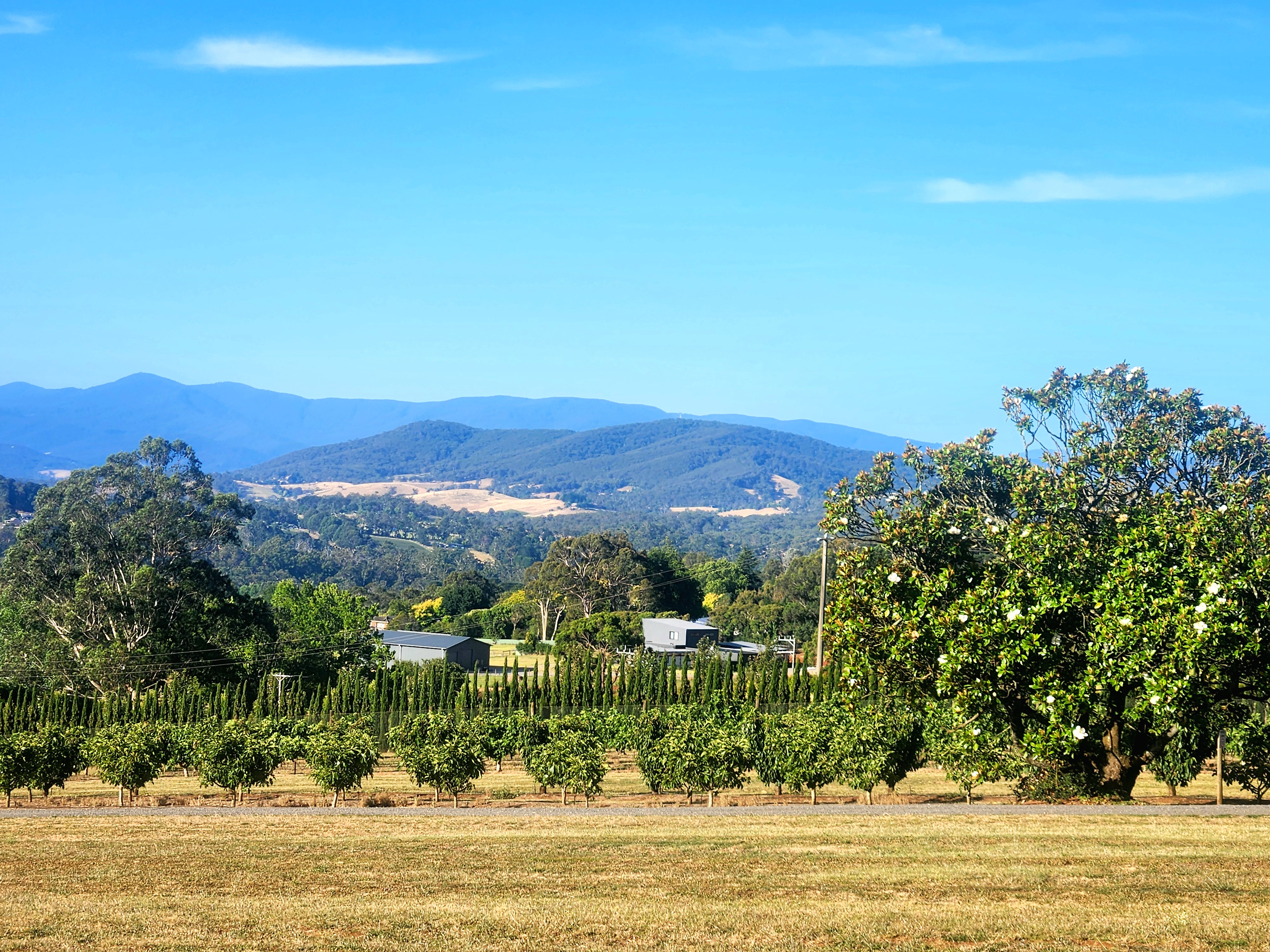
The Clare Valley unfolded before us in a tapestry of green — rolling hills stitched together with vineyards, wheat fields, and grazing land.

It’s a landscape that wears both its beauty and its purpose proudly.

Here, the earth works hard, and the rewards are plenty: winter wheat swaying like waves in the breeze, summer vines heavy with grapes destined for world-class wines, and sheep dotting the pastures in between.

This rhythm of farming seasons — grain, grapes, and grazing — has shaped the valley into one of Australia’s richest agricultural heartlands.

It’s not just about what grows here, but how it all flows together, a patchwork of abundance nurtured by fertile soils and generations of steady hands.

As we wound our way through the valley’s rolling hills, the story of the land seemed to linger everywhere — in the vineyards, the grapevines, and the wheat. It felt only natural, then, to step further into history, and our next stop was a place where elegance and ambition still echo through the corridors: Martindale Hall.

This grand Georgian-style mansion rises from the countryside like a slice of England planted in the heart of South Australia.

We learned the story of Edmund Bowman as we wandered through the grand halls and rooms of Martindale Hall.

Each space seemed to whisper fragments of his ambition, extravagance, and unfulfilled dreams.

It was built in the late 1870s for Edmund Bowman Jnr, a man whose family had journeyed from sheep farms in England’s Lake District to the rugged fields of Tasmania, and finally to South Australia.

The Bowmans were no ordinary settlers — Edmund’s father, Thomas, had secured 11,000 acres around Mintaro, where he established a merino sheep stud that became one of the most famous in the colony.

Edmund Jnr, the eldest son, grew into a spirited young man — strong, self-assured, and already steeped in privilege.

After his education at St Peter’s College in Adelaide, he travelled to England in 1875, where the refined traditions of Cambridge and English countryside captured his heart.

He studied law at Clare College, but it was not only books that held his attention.

Edmund fell for an Englishwoman, Frances Hazel, and vowed to build her a home in Australia so magnificent she would gladly cross oceans to share it with him.

And so he commissioned London architect Ebenezer Gregg to design Martindale Hall — a mansion of grandeur and extravagance.

Completed in less than two years, the Hall boasted 32 rooms, a coach house, stables, a dam, a polo ground, a private horse training track, a pack of foxhounds, and even a cricket pitch for entertaining English cricketers.

It was a bold dream, a love letter in stone and timber.

Sadly, the dream was only half-fulfilled — Frances Hazel never came to Australia, so in the beginning, Edmund shared the house with his brother Charles, his ever-loyal companion.

But then in 1884 he married Annie Cowle at St Peter’s Cathedral, and together they raised six children.

Walking through its stately rooms today, you can still feel the weight of Edmund’s youthful ambition, his longing for grandeur, and his desire to carve a piece of England into the heart of the Clare Valley.

Stepping inside Martindale Hall was like stepping back through time.

The air seemed to hum with echoes of another era — of carriages rolling up the drive, silk gowns sweeping across polished floors, and the laughter of guests gathered for cricket matches and grand dinners.

Sunlight streamed through tall sash windows, falling across intricately carved fireplaces and rich timber panelling, as if the house itself still wanted to show off its finery.

What struck me most was the sense of scale: every room seemed designed to impress, from the sweeping staircase to the drawing rooms where English visitors would once have sipped tea.

Yet for all its grandeur, there was something strangely personal about it too.

I found myself imagining Edmund Bowman pacing the halls with plans and dreams swirling in his head, or Annie Cowle watching her children run across the grounds.

As I wandered from room to room, I couldn’t help but think how remarkable it was that such a place exists here in the Clare Valley, surrounded by vineyards and wheat fields.

It felt like a reminder of both ambition and transience — how one man’s dream could rise in stone and still, in the end, be shaped by the twists of life and love.

Standing there, it was impossible not to wonder how many dreams are etched into walls like these — some fulfilled, others left behind — yet all becoming part of the stories that outlive us.

As I wandered back through the quiet rooms, I found myself thinking of my own life, and how it too has been shaped by forces and turns I never could have controlled.

Leaving the grandeur of Martindale Hall behind, we felt grounded again in the charm of Mintaro itself.

Since we were already there, we decided to have a wander — and I’m so glad we did. We parked near the Magpie and Stump Hotel, the town’s iconic pub, and set off on foot to see what we might discover.

It didn’t take long.

Hill Street revealed itself as a time capsule, a place where history lingers in every detail.

Character-filled stone cottages stood proudly along the way, their walls weathered yet dignified.

The old stone fences that lined the street seemed just as alive with memory, as though they had quietly witnessed the passing of countless generations.

Together, they told the story of a town built with care, resilience, and a sense of permanence that still speaks across the years.

At the end of the street, to my delight, we stumbled upon St Peter’s Sacred Space, a quiet find that felt both surprising and special.

Just when I thought the day couldn’t offer up any more treasures, Burra Street appeared.

Lined with Mintaro’s old shops, it had once been bustling with life and trade.

Built in the 1850s, these humble stone buildings became the backbone of Mintaro’s daily life.

Within their walls worked the butcher, bootmaker, and blacksmith who kept the community going.

Over time, they also housed a saddler, bank, stock agent, and fodder store — all the essentials of a thriving township.

It struck me as an early version of a shopping complex — practical and essential, yet full of character.

I could almost imagine neighbours stopping to chat at the doorway of the butcher or leaning on a stone fence while waiting for the blacksmith.

These little shops weren’t just businesses; they were the places where stories were exchanged and the lifeblood of a small community flowed.

We left Mintaro with a sense of having stepped back in time, and once again found ourselves admiring the passing countryside.

The road wound through rolling hills where fields stretched out under the wide Clare Valley sky.

Soon the vineyards returned to view, row upon row of vines tracing neat lines across the slopes.

As we drove past our own Airbnb nestled right in the middle of it all, I felt a small thrill — as though we weren’t just visitors to this wine country, but for a moment, part of its living landscape.

Since we were in the Clare Valley, it felt only right to visit at least one winery.

As luck would have it, we discovered that our Airbnb was only minutes away from Peter’s favourite winery — the very place that produces the wines he treasures most.

When we booked our stay, we hadn’t even realised this happy coincidence.

So, off we went to Taylors Wines in Auburn. This family-owned winery has been around since 1969 and is now in the hands of the third generation. They’ve built a reputation for producing reds that are not only powerful but also beautifully elegant — wines that really capture the spirit of the Clare Valley while still keeping their finesse.

Peter, of course, was especially delighted to stand on the ground where his favourite St Andrews range begins its journey.

For my readers in the northern hemisphere, you can still find these wines — they’re just sold under the name Wakefield Wines instead of Taylors. Same wine, same passion, just a different label.

By now we were hungry, so we made our way across to The Sun Rise Hotel in Auburn.

We couldn’t help but smile at the humour on the front door, which announced the opening hours as “The sun rises from: …” We also noticed that the sun takes Mondays off completely — at least at the Sun Rise Hotel!
This hotel has a long history, dating back to 1850 when it was first known as the Rising Sun Inn. I even came across an old photo of the place, and it was such a thrill — like peeking through a window into the past.

I enjoyed my vegetarian pasta followed by a Berry Crumble for dessert, and with full bellies we were ready to stretch our legs.

Exploring Auburn on foot gave us another taste of country towns that truly cherish their heritage.

First, we came across the old hotel stables, built before 1855.

Since Auburn didn’t yet have a town hall until 1866, the loft of this two-story barn became a gathering place for everything from court sessions and council meetings to socials, church services, and even the telegraph office. I loved learning these little snippets of history, imagining the bustle of everyday life that once filled the space.

The stone wall around the hotel yard caught my eye too. I learned it was once topped with jagged glass to keep out “rough men” — a quirky and rather inventive detail from another time.

A little further up the hill, we discovered the old Police Station and the Courthouse, which served the town from 1859 right through to 1973.

Nearby stood the old Anglican church, its stone walls holding onto quiet stories of worship and community.

Across the street, a beautiful park offered us a green and peaceful pause.

On its edge stood the Old Upper Wakefield District Council Office, a sturdy building that once housed official business but today has found a gentler purpose as the town library.

Wandering through Auburn, I was struck by how carefully the town has held onto its past, not just preserving buildings but keeping their stories alive.

It felt as though every stone wall, stable, and church had something to whisper, reminding us that history isn’t only found in museums — it’s woven into the very fabric of small country towns like this one.

By the time we returned to our car, the afternoon sun was beginning to soften, and so were we. From the playful goats and guineafowls that greeted us in the morning, to the grandeur of Martindale Hall, the charm of Mintaro, and the flavours of Taylors Wines and Auburn’s Sun Rise Hotel, the Clare Valley had given us a day that felt full to the brim.

We drove back past the vineyards, our Airbnb waiting among them, feeling grateful for the beauty, history, and stories we had been able to step into.

It had been one of those days where the land, the people, and the past all seemed to conspire together to leave a lasting memory.

Link to booking site Blocks Road Remarkable Accommodation: http://www.blocksroad.com.au


Won't you PLEASE leave a Reply?