
We woke up in our gorgeous Gobdogla Airbnb to find that the world outside had been sprinkled in pink and purple.

Overnight, the whole chardonnay vineyard stretching out from our backyard had transformed into something almost unrecognisable, as if a host of fairies had danced lightly across the vines while we were lost in our dreams.

And what a welcome it was to an extraordinary day — a day in which we woke up in South Australia, dropped into New South Wales, and ended up falling asleep in Victoria.

Three different states in one day; not a bad effort, even by my adventurous standards.

We noticed the vines beginning their green bud burst — those very first tender shoots, tiny leaves swelling with life, breaking through after the long dormancy of winter.

Perhaps they had been there yesterday, hiding quietly until we finally slowed enough to see them, or perhaps it really was the fairies with their pink-purple dust nudging them awake.

Even the roses had begun to stir, new growth curling and reaching for spring.

It felt as if the whole landscape had taken a breath, ready to tell us its next story.

Reluctantly leaving behind our fairy-dusted vineyard, we set off toward the Victorian border, only to find ourselves in the very heart of South Australia’s fruit bowl — here in the Riverland.

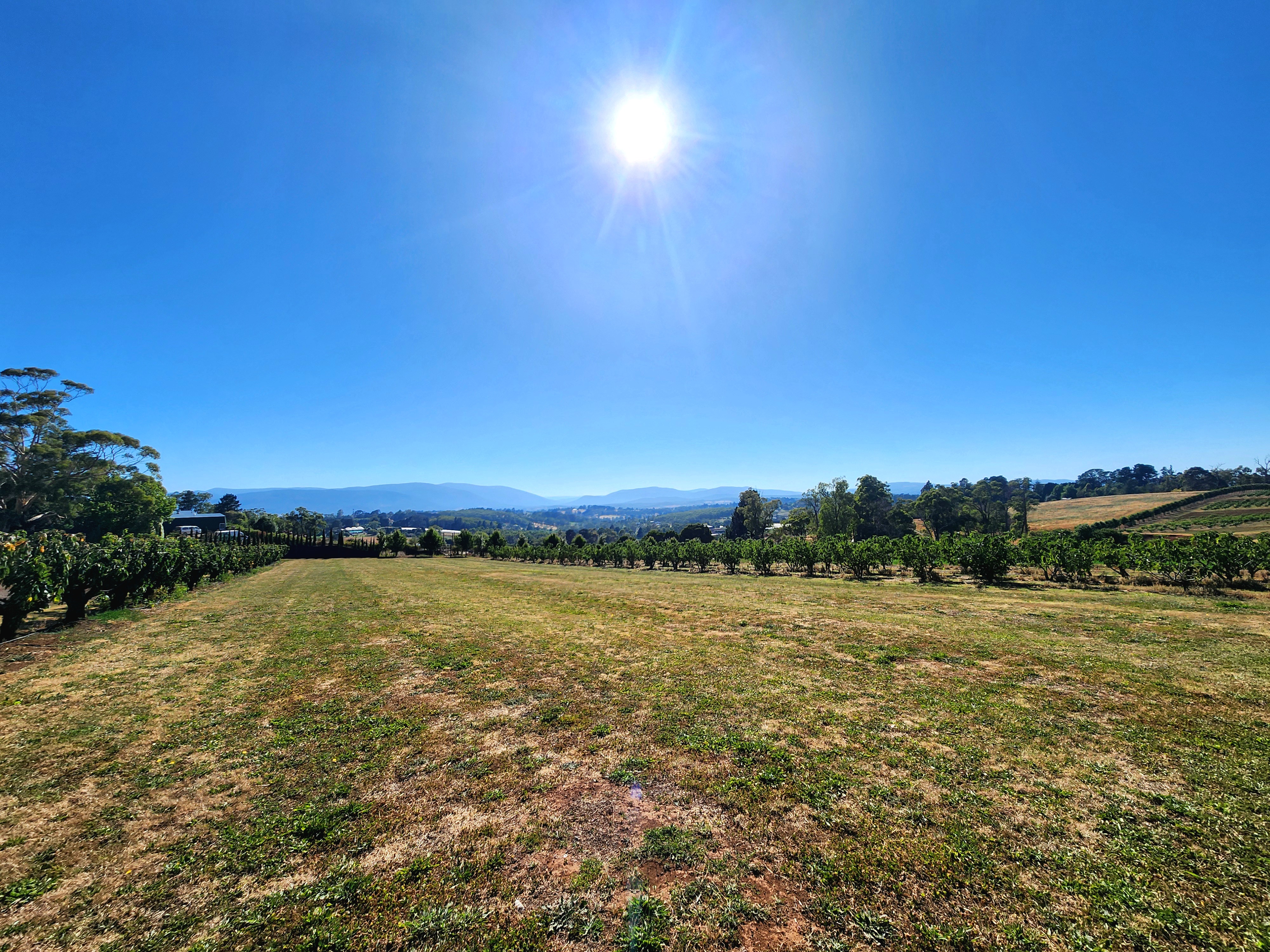
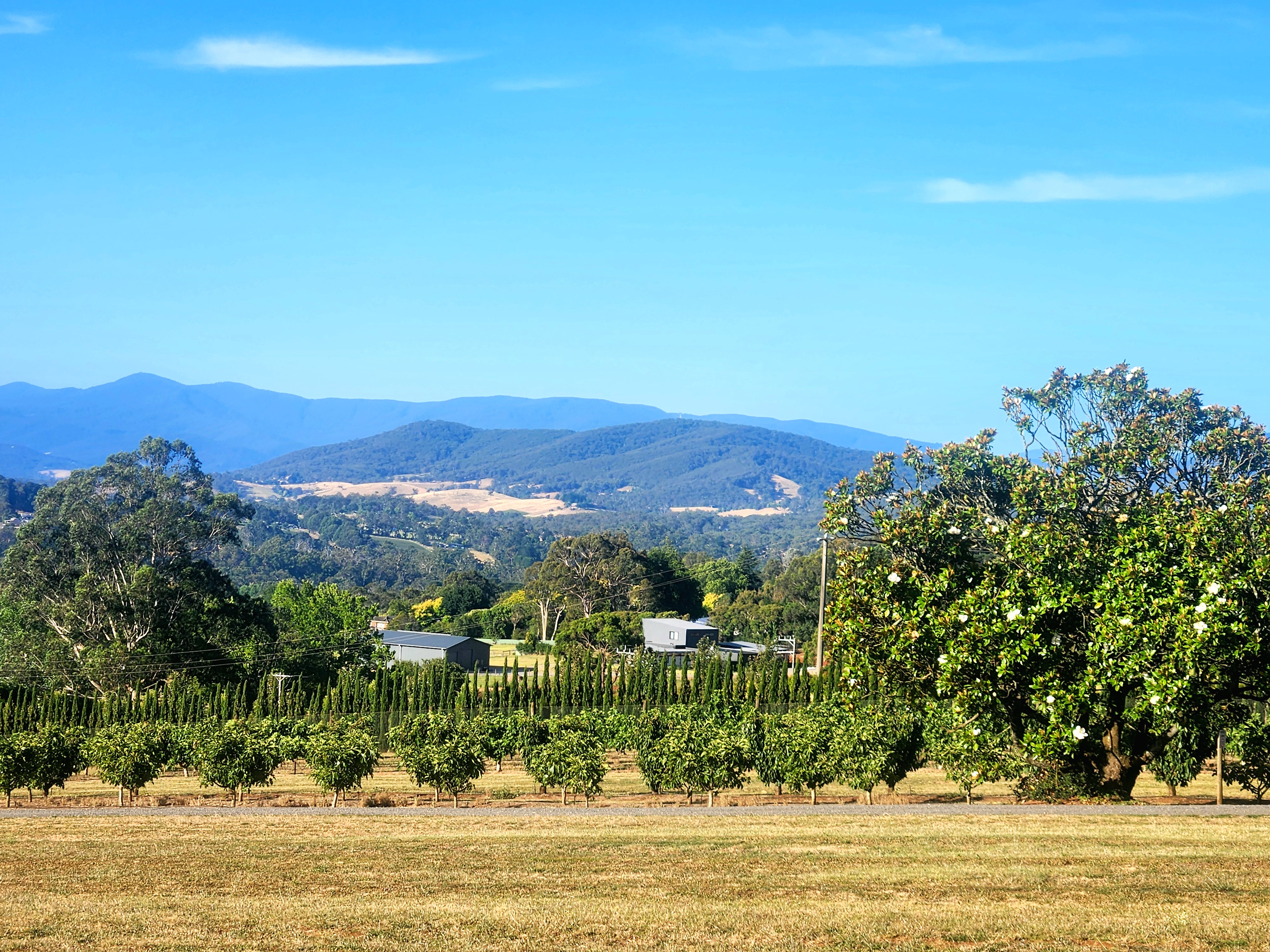
This is a land where irrigation turns arid country into orchards, and the horizon seems stitched together with endless groves.

Roadside stalls, neat and inviting, promised crates of just-picked produce — the kind of fruit that still tastes of the soil and sun it grew in.

The region is especially famous for its citrus and stone fruits, and we could see why. The vineyards that had kept us company so far now gave way in turns to almond trees, then long, disciplined rows of citrus heavy with promise.

At times we drove for kilometres with nothing but trees flanking us, one orchard blending seamlessly into the next, as if the land itself were offering an endless banquet.

We were totally in awe — both of us — unable to believe just how many nut and fruit trees could exist in one place, stretching endlessly across the horizon.

Every now and then we would pass rows of blossoming trees, some ornamental, others fruit trees already dressed in spring flowers.

Their soft whites and pale pinks stood out against the deep green orchards, like delicate brushstrokes painted across the countryside.

It felt as though the land was celebrating in its own quiet way, each orchard taking a turn on nature’s stage — almonds shimmering in blossom, citrus glowing in neat rows, and vines unfurling with the first light green sprout promise.

Each glimpse left us both marvelling again at how varied and generous this landscape could be.

Our first stop for today was the Loxton Historical Village.

It is no secret that I love house museums — they are windows into the past, and stepping into them feels like time travel without the need for a machine.

We were greeted warmly by Barb, who shared with us that tomorrow would be their “Alive Day,” a special event featuring historical demonstrations such as blacksmithing and sheep shearing, free horse and cart rides, bustling market stalls, and staff dressed in period costume.

We couldn’t help but feel a twinge of regret at having missed it by just one day.

Still, the village held plenty of magic of its own.

As we wandered down its little streets, we glimpsed how those before us lived — humble cottages with lace-curtained windows, tools that once shaped livelihoods, and kitchens that told silent stories of bread baking and stews simmering on the stove.

We wandered into the old garage where a row of vintage cars stood waiting, polished but proud of their age.

Each one seemed to carry stories of country roads and Sunday drives, reminders of a time when travel itself felt like an adventure.

Before we left, Barb at the front office suggested we take a short detour down by the river, where an old paddlesteamer now houses a café. Curious, and with time on our side, we headed that way. Waiting for us was the magnificent Murray River Queen, her grand frame resting gracefully on the water, a proud reminder of the days when paddleboats were the lifeline of the Murray.

The Queen welcomed us aboard with the promise of refreshments, and we couldn’t resist.

True to the spirit of the Riverland, we chose to share a citrus tart — tangy, sweet, and the perfect nod to the orchards we had been admiring all morning.

It felt fitting, almost like a small celebration of the land’s bounty, savoured on the deck of a vessel that had once carried both people and stories up and down this mighty river.

We continued our drive, and once again the almond groves stretched endlessly along the roadside, their blossoms so thick and pale that from a distance they almost looked like a dusting of snow.

The illusion was magical, a wintry vision painted onto a warm spring day.

Sharing the stage with the almonds were the wildflowers, splashing colour across the edges of the road — bursts of yellow, and orange dancing in the breeze.

They softened the straight lines of the orchards and turned the journey into a moving garden.

It was a sight I couldn’t easily tire of, each new stretch of road offering another brushstroke of beauty.

Our next stop was the Riverland Wine Centre in Lyrup. Having visited so many wine regions during this trip, we’d grown accustomed to seeing cellar doors dotted across the landscape, each one inviting travellers in for a taste. Riverland, however, plays by different rules. Here, the sheer scale of production leaves little room for the boutique charm of individual cellar doors. Instead, this Wine Centre steps in as the answer, bringing together wines from around thirty different producers under one roof.

It’s a fitting solution for a region of such magnitude. Riverland is, after all, Australia’s largest wine-producing region by volume — the engine room of the nation’s wine industry, accounting for over a quarter of the country’s grape crush. The Murray River, ever reliable, provides the irrigation that makes it possible to grow such an astonishing variety of grapes in what would otherwise be unforgiving country.

As we drove through, it was easy to believe those statistics: the vineyards seemed endless, the only rival to their number being the orchards of nuts and fruit that had already captured our admiration.

Not long after crossing the border from South Australia into Victoria, the landscape surprised us yet again. There, just off to the side of the road, three wild emus strode confidently through the scrub as if they owned the place. Until this road trip I had never seen an emu in the wild — they had always been creatures of wild life parks. But today I can proudly say I’ve seen six of them, each sighting adding a little thrill to the journey. There’s something unforgettable about watching these tall, ungainly birds move so gracefully through their own country, a reminder that out here the road is never ours alone.

By the afternoon we had reached our Airbnb in Mildura, and it immediately felt like the perfect place to land. Waiting for us was a thoughtful gift — a bottle of local wine — a gesture that made us feel genuinely welcomed.

After settling in, curiosity got the better of us, and we decided to go exploring. First came the irresistible temptation of crossing into New South Wales — after all, it was only a short drive over the bridge.

Three states in one day deserved to be properly acknowledged!

With that small adventure ticked off, we turned our attention to Mildura itself, strolling its streets and soaking in its character.

I half expected Shane Jacobson to step out from around a corner — the kind of down-to-earth humour and warmth he embodies seemed to echo in the atmosphere of the town.

As evening drew in, we found ourselves at a cosy Italian restaurant where gnocchi became our reward for the day’s travels.

Comforting, hearty, and satisfying, it was the perfect meal after a day that had been full of colour, discovery, and a touch of magic.

As the sun slipped below the horizon, Peter and I made our way to the trail of lights on Lock Island.

If you are ever in Mildura, it is an experience not to be missed.

We walked the two-kilometre loop twice — the first time soaking in the golden glow of the river at sunset, listening to the chorus of birds as the day gave way to evening.

There was a deep tranquillity in that moment, as if the river itself were exhaling after a long day.

Our second lap transformed the island into another world.

With darkness as its canvas, Bruce Munro’s installation came alive.

Twelve and a half thousand points of white light shimmered on optical fibres, swaying gently in the breeze.

The effect was spellbinding, like stepping into a dreamscape where fireflies had multiplied a thousandfold and chosen to dance just for us.
It wasn’t only beautiful — it was moving, a reminder of how art and nature together can stir something profound within. We found ourselves walking in near silence, content to let the lights and the night do the talking.

As we finally returned to our Airbnb that night, I couldn’t help but think back on the arc of the day. We had woken to a vineyard sprinkled in pink and purple, as if fairies had left their mark, then driven through the abundant wildflowers, orchards and vineyards of the Riverland, witnessed emus in the wild, and crossed three states in a single day.

And now, we ended beneath a sky and landscape transformed by light — a dreamlike finale on Lock Island. It felt as though every part of the day, from nature to history to art, had conspired to remind us of the wonder woven through both the ordinary and the extraordinary. A day of abundance, magic, and memories we will carry with us long after the lights fade.


Won't you PLEASE leave a Reply?