
We left Anneli and Ray’s place this morning with hearts full of thankfulness. Their welcome had been so open, so generous, that it felt less like visiting friends and more like returning to family. Sitting around their table, I was reminded again of how powerful those early migrant experiences are — stories that shape us for a lifetime. Anneli and I found ourselves comparing memories, because we share the same journey of leaving Finland in the 1970s and beginning anew here in Australia.

As we travel through this region, I notice how often the history of early settlers is remembered and honoured. It stirs something familiar in me, for I too carry the story of starting over on the other side of the world. And yet, I’m mindful that these narratives are just one part of a much deeper story. Long before us, this land was — and always will be — the home of Aboriginal and First Nations people. Their history runs far deeper than any of ours.

Migration is a huge experience — it reshapes identity, uproots you, and asks you to grow in ways you never imagined. But my reflections never take away from those born here, nor from those whose ancestors cared for this land for thousands of years. Instead, I hold my story alongside theirs, humbled by the resilience in all of them, grateful that this country found room for me too.

We set our course toward the Barossa, but first came a lingering farewell to Adelaide. As we drove through the city one last time, Peter remarked that “Adelaide feels like a refined lady — stylish, educated, traditional, and utterly sophisticated. Even her name carries grace.” I found myself nodding in agreement, for there is something about Adelaide that seems both dignified and welcoming, a city that wears its history with poise yet never feels unapproachable.

Our climb through the hills soon offered sweeping views back over the city — breathtaking glimpses of Adelaide laid out below us, sunlit and serene. The temptation to stop and capture it on camera was strong, but the winding roads offered no safe place to pull over. The beauty had to be stored in memory rather than pixels, a fleeting moment of wonder kept just for us.
Sensing my disappointment at missing the shot, Peter, soon added another observation: “There’s a photo in every direction, all the time. This whole road is one long photograph waiting to be taken.” And again, I couldn’t disagree.

The landscape seemed to compose itself into perfect frames with every bend in the road — rolling hills, scattered gums, and skies that seemed painted just for the journey.

Not long into our drive, we rolled into a little village tucked into the hills — Uraidla. Its charm was immediate and irresistible, so much so that we simply had to stop at the local pub.

The building itself seemed to brim with character, and its signage made us laugh out loud. On one side, it proudly declared itself “the best pub in Uraidla,” while on the other it just as boldly proclaimed “the worst pub in Uraidla.” That, we decided, is Aussie humour in its purest form — cheeky, self-deprecating, and impossible not to love.

Of course, the punchline was that there’s only one pub in Uraidla, so both statements are equally true.

Standing there, taking it all in, we felt as though the village had let us in on a private joke, a wink from the locals to anyone passing through. Places like this, with their playful character and understated charm, are what give the hills their heart.

Our sweet tooth guided us to our next stop — Melba’s Chocolates. This is no ordinary chocolate shop, but a piece of living history. Founded in a backyard shed some 44 years ago, Melba’s has since grown into a thriving business housed in a State Heritage–listed factory building.

What makes Melba’s truly special is their commitment to tradition. They continue to use vintage, age-old machinery, paying homage to the artisans of the past while keeping those time-tested methods alive. We found ourselves stepping back into a gentler era when craftsmanship took precedence over speed.

Of course, we couldn’t resist a purchase — caramel fudge for Peter, and for me, a packet of dark chocolate–coated licorice twists, a combination as bold as it is irresistible. Adding to the experience, we watched as the confectioners hand-crafted their sweets before our eyes.
Our journey then carried us to Mount Torrens, where once again the road demanded a pause. We simply had to stop, drawn in by the sight of blossom trees framing a gorgeous old Methodist Church, built in 1854. It stood quietly dignified, a reminder of the generations who had gathered there before us.

At its feet, spring had spread her own carpet — the ground alive with bulbs bursting into colour. Golden daffodils stood tall, white jonquils added their elegance, and clusters of deep purple muscari created a painter’s contrast.

The air was perfumed with their intoxicating fragrance, as if the whole village had been dressed for celebration.

These flowers and blossoming trees, timeless heralds of the season, whispered of renewal and new beginnings.

In their presence, it felt as though nature itself was echoing the stories of migration and settlement we had been reflecting on — reminding us that every journey, no matter how daunting, can bloom into beauty with time and care, just as each season faithfully gives way to the next.

And then the vineyards began — and they didn’t stop. Row upon row stretched out across the hillsides, weaving an endless tapestry of green. They went on and on, as far as the eye could see, until it felt as though the very landscape itself had been given over to the vine.

All through the day we drove with vineyards at our side — on the right, on the left, behind us and ahead. At times it seemed as though the road was merely a ribbon threaded through the heart of this wine country, leading us deeper into its embrace. There was a quiet rhythm to it all: the symmetry of the rows, the flicker of sunlight on leaves, the sense that we were entering a place where the land and its harvest define both the culture and the way of life.

We dropped into Lyndoch’s Lavender Farm, curious to see its famed fields of purple. The season, however, was already slipping past its peak. Most of the rows had finished their grand display, yet here and there a few late bloomers lingered on, their soft fragrance drifting in the breeze as if unwilling to let go of spring’s promise.

Even without the fields in full bloom, the place carried its own charm. The silvery-green rows stretched across the landscape, hinting at the beauty they must hold in their prime, while the gift shop offered a taste of lavender’s magic in oils, soaps, and sweets. It was a quiet reminder that seasons never stand still — they ebb and flow, each leaving behind traces of beauty to be found if we only take the time to look.

Next, we arrived in the village of Lyndoch, one of the Barossa’s oldest settlements. Nestled among the rolling vineyards, it felt like a natural gateway into the region. The village had a welcoming charm, with its stone buildings and leafy streets hinting at the deep history and community spirit that have shaped this valley.

By now, it was clear we had truly arrived in the Barossa. Everything around us — from the endless vineyards to the heritage towns — spoke of a place defined by its connection to the land. The Barossa isn’t just a destination on a map; it’s a living, breathing story of growers, winemakers, and settlers whose roots, much like the vines, run deep. There was a sense of anticipation in the air, as though the region itself was inviting us to slow down, taste, and take part in its rhythm.

Then, as we drove into Krondorf, it happened — I saw it. My ideal country home. Nestled among the green rolling hills, it stood with the kind of quiet presence that instantly caught my heart. Every now and then, in my daydreams, I imagine a life in a little country town, where the air is fresh, the pace is gentle, and the view from my front door is all fields and sky. And there it was, right before my eyes: the home that matched the picture I’ve carried in my imagination for years.

Something about it felt both familiar and aspirational, as if a fragment of my private dream had slipped into the real world just to wave hello as we passed by. For a fleeting moment, I could see myself living there — mornings with mist on the hills, afternoons in the garden, evenings watching the sun sink behind the vines. We didn’t move in, of course, but the image stayed with me, etched like a postcard in my memory.

Soon after my dream country cottage, we found ourselves pulling into Rockford Wines. This is no ordinary winery — it’s a five-star, iconic name in the Barossa, celebrated for its traditional, high-quality wines crafted from old vineyards. But what truly captured me wasn’t just the wine; it was the feeling of the place.

I was instantly smitten by the cosy, historic atmosphere.

The quaint stone heritage buildings, gathered around a paved courtyard, created a rustic charm that felt both timeless and welcoming.

It was the kind of place where you immediately want to linger, to soak up its character and warmth.

With its small, friendly cellar door and the presence of knowledgeable, chatty staff, Rockford offers an authentic and memorable stop in the Barossa Valley — the kind of place where history, craftsmanship, and warm hospitality come together seamlessly.

Anneli had told us about the historical walk through Bethany, which she had once taken with a guide. Intrigued, we followed her recommendation and set out along the village street.
Bethany holds a special place in the Barossa story — it was the very first village established in the valley, settled in 1842 by twenty-eight families who arrived under the care of Pastor Fritzsche. Their journey had been anything but easy. They sailed from Hamburg on the vessel Skjold, and in the long passage to Australia, fifty-one lives were lost. The hardship of that voyage is hard to fathom, yet out of it grew a community that still stands today.

The village itself was laid out in the German Hufendorf style, with homes built neatly along the main road and farmlands stretching out behind. Daily life carried its own rhythms — in the evenings the village herdsman would gather the cattle and drive them home for milking, announcing his arrival with a blast of his horn. At the heart of the settlement stood the church and school, anchoring community life.

Walking there today, it was easy to sense that close-knit spirit. Bethany still feels like a village bound by tradition and continuity, with some of the original settlers’ names remaining part of the community fabric. The air seemed thick with stories — of endurance, faith, and the determination to build a life far from home.

With the stories of Bethany’s early settlers still echoing in my mind — and my own memories of Finnish families migrating here by ship, some never surviving the long journey — we left the village and drove toward the very heart of the Barossa, to Tanunda. And there, one place seemed to rise above all others, calling us to stop: Chateau Tanunda.

The moment we arrived, we sat quietly, almost reverently, just taking it all in.

It was impossible not to be in awe.

Chateau Tanunda quite literally takes your breath away.

Established in 1890 on the site of some of the Barossa’s earliest vineyards, it has become nothing less than the icon of the valley.

Internationally recognised, it produces wines considered among the best in the world.

Its signature Everest Shiraz and 100 Year Old Vines Shiraz are highly prized by critics, collectors, and wine lovers alike.

The chateau itself is grand and imposing, yet undeniably beautiful — a majestic stone building with sandstone walls, ornate gables, a prominent central tower, and sprawling wings that seem to stretch across the landscape.
When it was built, it was the largest building in all of South Australia, and even today it commands attention. Inside, its extensive cellars, grand interiors, and features such as a ballroom only add to the sense of magnificence, while the grounds complete the picture of historic grandeur.

The cellar door is an experience in itself, lined with age-old barrels and offering tastings that carry the legacy of the land.

I noticed a set of white tablecloth tables tucked right there among the barrels, and my imagination couldn’t help but wander. What a setting that would be for a romantic dinner — candlelight flickering against stone walls, the scent of oak and wine in the air, history and romance mingling in one unforgettable evening.

But the Barossa still had more treasures to reveal. From the affluent grandeur of Chateau Tanunda, we made our way to another stop — Langmeil Winery.

This one came highly recommended by Anneli, so of course we couldn’t resist renaming it “Anneli’s Winery.”

The atmosphere there was simply delightful, with its beautiful gardens and inviting outdoor spaces creating a sense of ease and relaxation.

Langmeil is more than just a lovely setting, though.

It holds a special place in wine history as the home of the world’s very first Shiraz vineyard.

Walking its grounds, you can almost feel the layers of tradition and care that have shaped it over time.

That sense of history, woven together with the charm of the place itself, gave Langmeil a unique character that was both memorable and quietly moving.

From Tanunda, we drove up to Mengler Lookout in Bethany, a vantage point that seems to gather visitors like a magnet. Several wine tours had paused there, and we found ourselves mingling with fellow travellers, all equally spellbound by the view.

And what a view it was. The Barossa spread out before us in a grand panorama — rolling vineyards stitched together like a vast green quilt, dotted with villages and framed by gentle hills. The sheer scale of it took our breath away, reminding us again of how deeply wine and land are intertwined here. Standing there, it felt as though the whole valley was laid open, its history and abundance unfolding at our feet.

Since we were in the heart of the famous Barossa Valley, we couldn’t resist visiting one more winery — Yalumba.

Its story goes right back to 1849, when Samuel Smith bought thirty acres to establish his own vineyard and orchard, naming it Yalumba, an Aboriginal word meaning “all the country around.” By day he worked as a gardener, and by night he planted his vines, later recalling that it had been a year of hard struggle — “but God gave me wonderful strength and my wife helped in every possible way.”

In 1852, Samuel and his son joined the rush to the Victorian goldfields. Luck was on their side; after four months, they returned 300 pounds richer, enough to invest further in vines. From there, Yalumba began to grow, quickly earning a reputation for quality that has endured.

Today, it remains proudly in the hands of the fifth and sixth generations of the family, a legacy as rich as the wines they produce.

We settled into the Wine Room.

The atmosphere there was rich with history and character.

Peter chose a tasting flight — the Samuel’s Collection — while we shared a cheese platter, the perfect companion to the experience.

Each pour carried with it a sense of place and time, linking us back to Samuel’s early vision.

By the end, Peter had found a favourite and decided to take a bottle home: Yalumba Barossa Shiraz Cabernet Sauvignon, a keepsake from a memorable day in wine country.

There was still one stop we couldn’t miss — Maggie Beer’s Farm Shop in Nuriootpa.

Most of my cooking and baking skills I owe to my grandmother, though she only ever taught me Finnish foods. Everything beyond that — from scones to simple, homely dishes — I’ve learned from Maggie Beer.

Her cookbooks have become priceless treasures on my kitchen shelf, and over the years I’ve enjoyed countless hours watching her YouTube cooking shows. She’s so wonderfully down to earth, and her way of teaching makes everything feel achievable.

So of course, being in this part of the world, I knew I had to visit her farm shop — and I’m so glad I did.

It was thrilling to step into the very kitchen I had so often seen on my screen, a place that already felt familiar.

The atmosphere was everything I hoped it would be.

It felt relaxed, unassuming, and perfectly nestled in beautiful natural surroundings.

An open fire glowed warmly, making the whole space feel welcoming and homely. For me, visiting this little shop wasn’t just another stop on the journey — it was a dream come true.

We continued our journey to Clare Valley along the spectacular Seppeltsfield Road, lined with its famous palm trees.

Amidst the rows of palms, the Gnadenfrei Lutheran Church stood gracefully at the centre.

I had heard about the palm trees before, but nothing prepared me for how far they stretched.

Turn after turn, there was always another long avenue of palms unfolding before us, their tall silhouettes framing the road like sentinels.

The sheer scale of it was mesmerising — a living landmark that seemed to go on forever. Each stretch felt like a new discovery, a reminder of how travel often exceeds expectation when seen with your own eyes. They were, quite simply, spectacular.

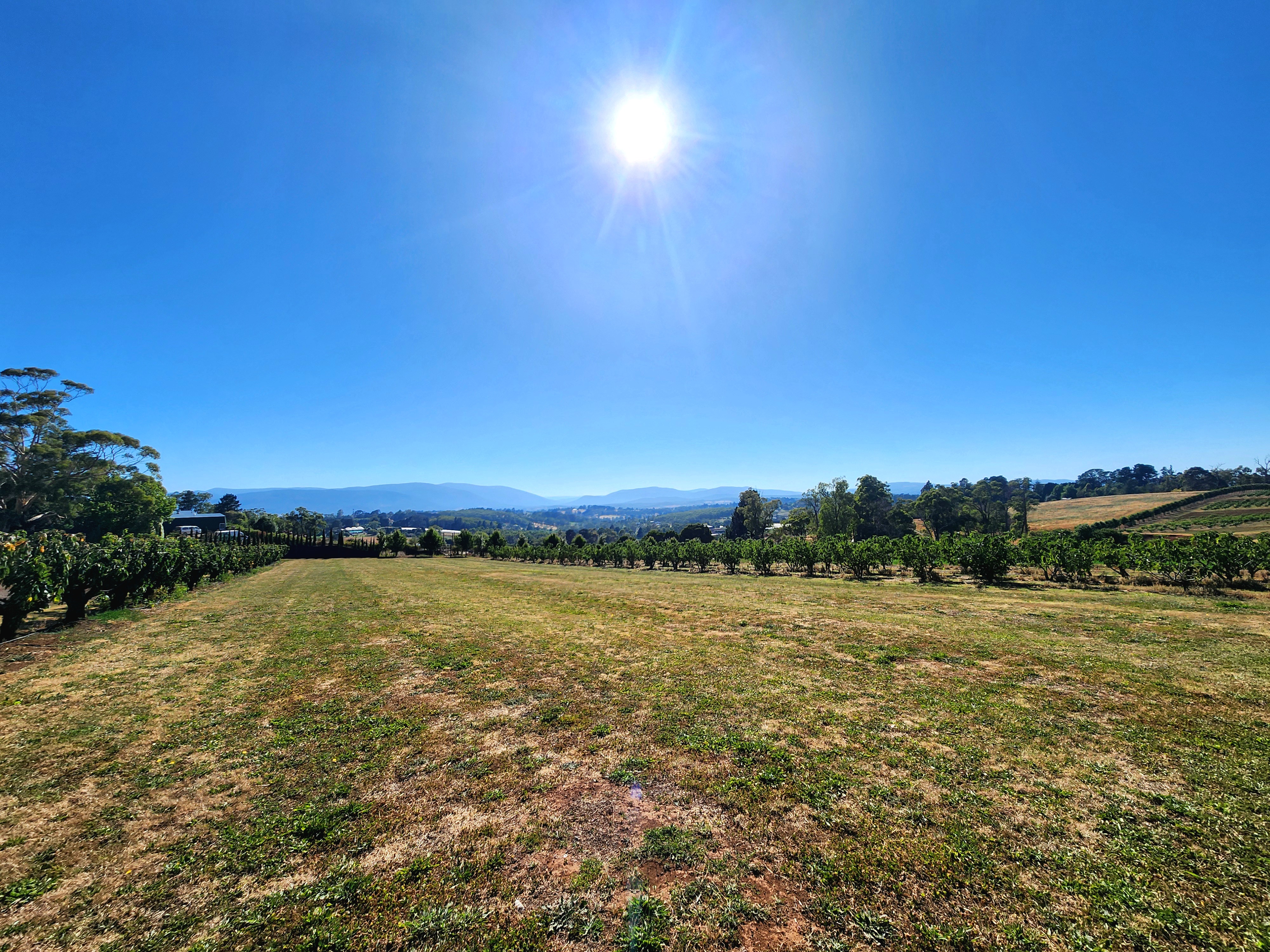
We arrived at Clare Valley and were greeted once again by vineyards, but this time also by vast golden wheat fields rolling across the landscape.

Just before sunset, we found our rustic and quirky yet wonderfully welcoming Airbnb.

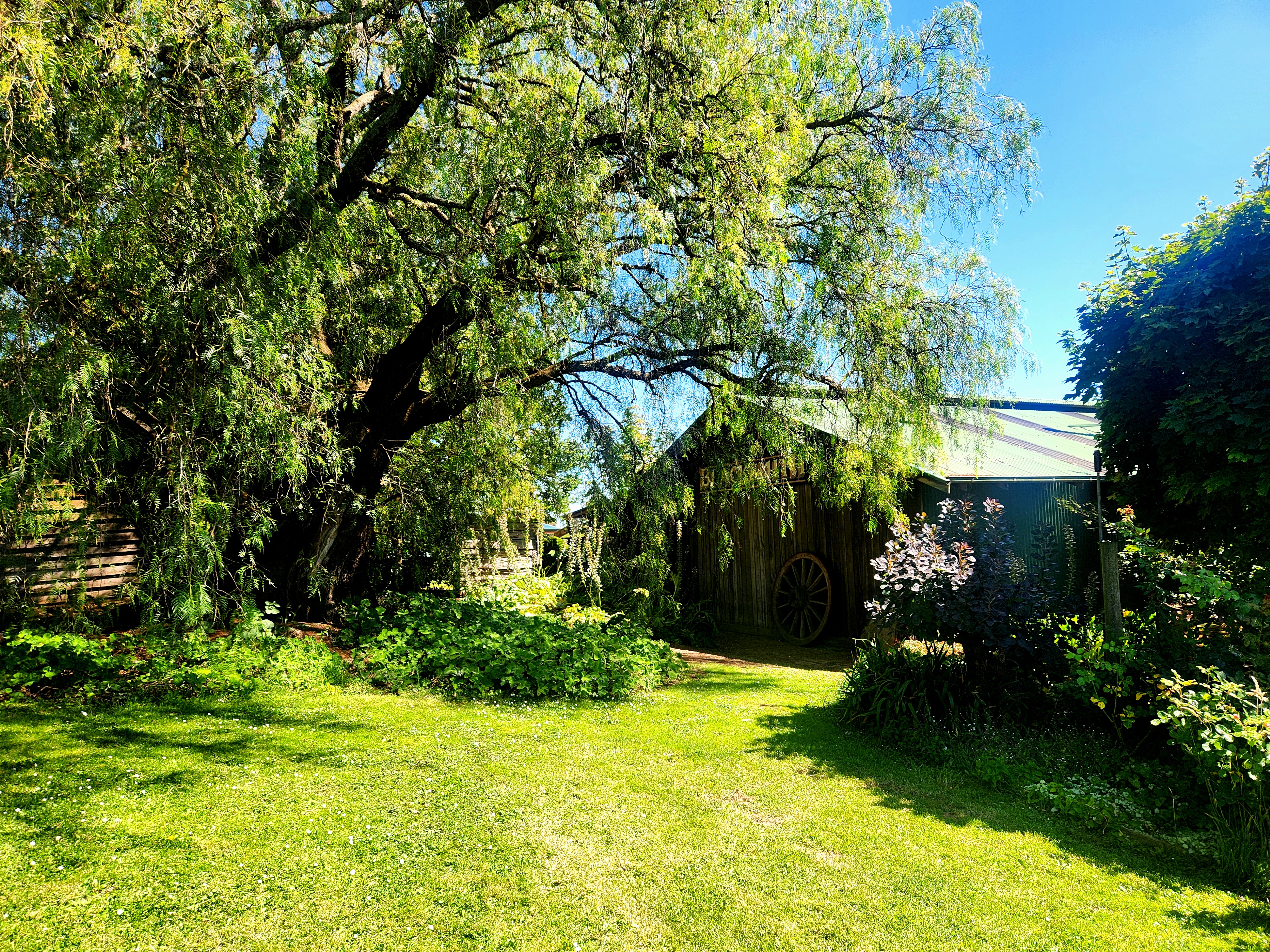
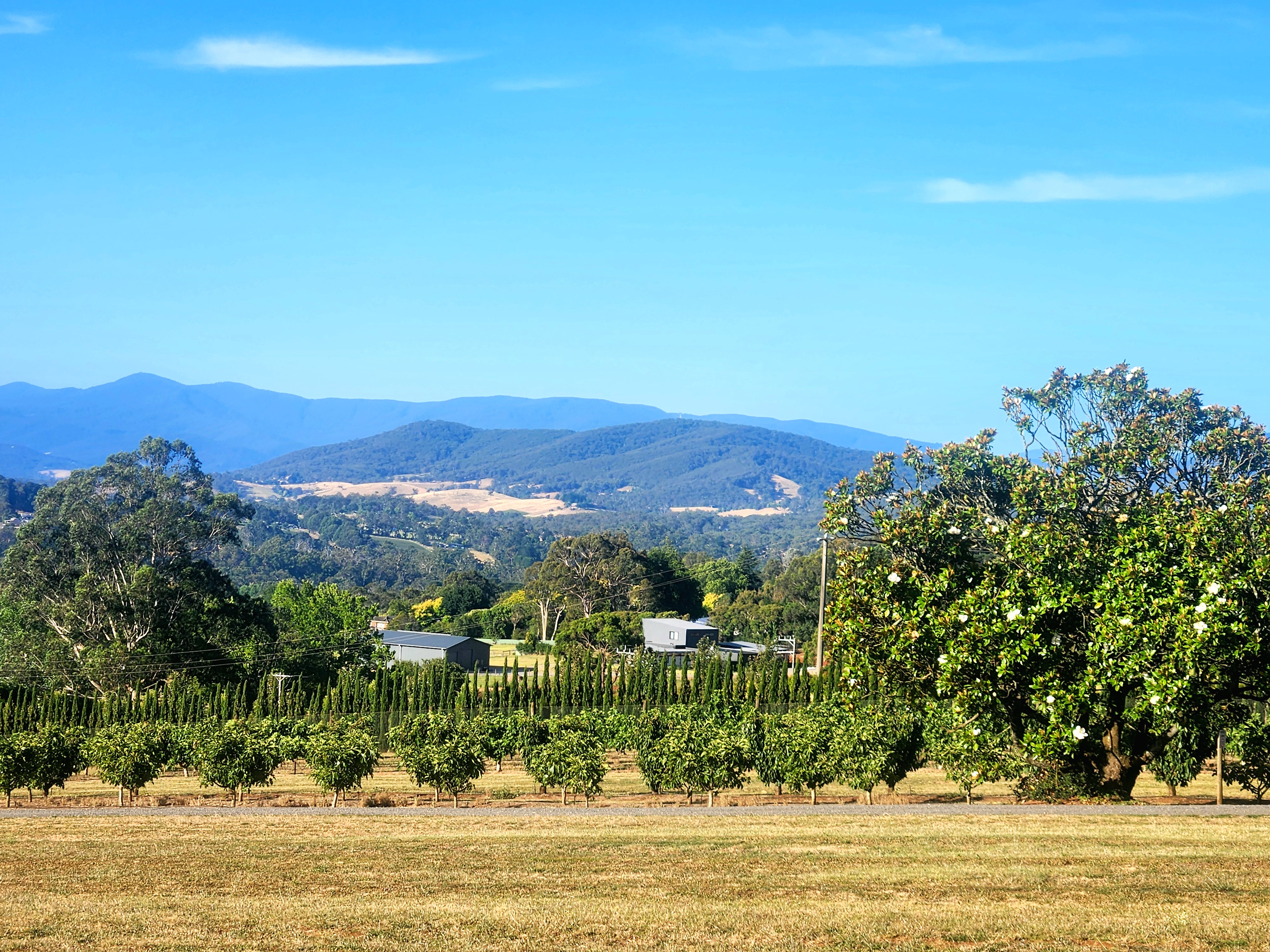
Bed in a Shed turned out to be a treasure. With its stunning views over the vineyard, it felt like the perfect retreat at the end of the day.

The studio is the original creation of resident artist Andrew Quixley, designed with imagination and flair.

Everywhere you look there are clever details, with recycled materials given new life in ways that create a warm, inviting, and inspiring atmosphere.

Outside, a covered pergola looks out across the vines — a spot that already promises many peaceful moments — while two resident goats add a touch of charm to the place.

It’s the kind of stay that makes you smile the moment you arrive.

We knew straight away that we would be very comfortable, and very happy, here.

It has been a big day — from leaving Anneli and Ray’s welcoming home, to winding through hills and villages, tasting history and wine, and finally arriving at our cosy little Airbnb in Clare Valley. Each stop seemed to carry its own story, weaving together history, migration, beauty, and flavour.
As the sun set over the vineyards and the goats settled in for the night, we felt grateful for the journey, for the surprises along the way, and for the chance to rest in such a peaceful place. Tomorrow will bring new adventures, but tonight we simply let the day’s memories linger.

Link to booking site Blocks Road Remarkable Accommodation: http://www.blocksroad.com.au


Leave a Reply to Apples of GoldCancel reply